Friday, December 12, 2014

The Kensington Reptilarium

18274632

I have to admit that I was drawn to this book by the cover artwork which depicts four cute kids and a rather quirkyly dressed man entwined with reptiles. Even the spine is beautifully embossed with a snakeskin design.

Set in December 1945, the Kensington Reptilarium tells the tale of four kids from the Australian outback. With their mother passed away and their father missing in action, they are moved to London, which has been devastated by war. Uncle Basti is their new guardian and he resides in the Kensington Reptilarium - a fantastical building filled with mysterious secret rooms and reptiles of all descriptions. Unfortunately for the kids, their uncle is a social recluse who doesn't like children and the local police are trying to shut the Reptilarium down.

This story has strong themes of family, World War II and the construction of gender and would therefore be most suitable for upper primary students over 10 years of age. I found the portrayal of Australia and the way the children lived in the early chapters reminiscent of the Lost Boys in Peter Pan.

The language used throughout the book is very lively and colloquial with frequent use of mannerisms. The sentences are often short and sharp with the pronoun omitted to emphasise thought processes and maintain a fast pace. Excerpts could readily be used to model this style of writing. The author also makes great use of devices such as onomatopoeia and gives beautiful poetic descriptions such as "ghost gums like shinbones" which are used to great effect (p36).

Teachers notes and ideas for classes are available from Random House.

Tuesday, November 11, 2014

Lucky

Lucky - David Mackintosh

When mum announces that there will be a surprise at dinner that night her two boys get a little carried away trying to guess what their surprise may be. Perhaps it's a new bike, a swimming pool or a new car? Children will have great fun using their imaginations to suggest what the surprise is. At the end they may also be able to make connections with times when they have jumped to conclusions themselves and then been let down. I really enjoyed the happy, quirky illustrations and the excitement portrayed through the interesting typography, but the real beauty of this book lies in the way that the characters handle their disappointment and the sweet but subtle underlying message that we are already "lucky" and should grateful for the small things we have.

Friday, October 24, 2014

Mystery Math: A First Book of Algebra


Mystery Math: A First Book of Algebra

Mystery Math by David A. Adler is a picture book that provides a great introduction to algebra. Equations are compared to see-saws or a balance scales, and it is explained that whatever is on one side has to be balanced by whatever is on the other side. This is an analogy that will definitely make sense to children. Appropriate terminology such as the word "variable" is used, but the great benefit is that this new vocabulary is also explained in simple terms as the mystery number. This gently encourages students to make connections and achieve deeper understanding of the concept. Step-by-step, illustrated examples of solving simple equations using addition, subtraction, multiplication and division are provided. Another idea I absolutely loved, was the provision of instructions in the back of the book for students to make their own balance scale using readily available resources including a coathanger, paperclips and coins as weights. What a fantastic book for helping to demystify a topic that students frequently find difficult!

Tuesday, October 14, 2014

The Listening Walk

The Listening Walk

The Listening Walk by Paul Showers was originally published in 1961, but it is still relevant today. A young girl takes a listening walk around her neighbourhood with her father and tells about all the sounds she hears on the way. This would be a great anchor book for Year 1 physical science students learning about how sound can be produced by a range of sources and can be sensed (ACSSU020). After reading this book, students could then take a listening walk around their school so they can build their own personal connections. They could also make their own audio recording of sounds for other students to guess the source.

Friday, October 10, 2014

The Boy Who Loved Math

I really love math myself. I'm not brilliant at it, but I do enjoy it. It saddens me greatly to hear children (and adults) say that they can't do math or that math is boring. It inspires me to want to change that perception. Over the last few years I have discovered that there are many wonderful children's picture books, covering an enormous range of mathematical concepts which can be used to gently introduce students to math and help make difficult concepts more accessible. Authors such as Greg Tang, David A. Adler and Dayle Ann Dodds have all written numerous books suitable for primary students, some of which I will share in later posts.

The Boy Who Loved Math: The Improbable Life of Paul Erdos

I knew I had to have this book as soon as I saw it. I have a little boy who loves math and he sometimes feels  a bit awkward and different because of it. This is the story of Hungarian mathematical genius Paul Erdos, who might provide an interesting choice for young mathematical enthusiasts studying significant people in Year 4. When I handed my son this book I could see him making connections as soon as he saw the cover and read the title.  He was grinning from ear to ear and asked if we could read it immediately. We spent a couple of delightful hours together, reading and studying the beautiful illustrations, pulling out sheets of paper and carrying out the simple steps described to find all the prime numbers using the sieve of Eratosthenes. We had not previously known that there were different types of prime numbers, but after reading the pages in the back of the book my son was inspired to do some research and find out even more. It can't get better than that!

This is a creative, fascinating book which I am thrilled to have added to my collection!

Tuesday, October 7, 2014

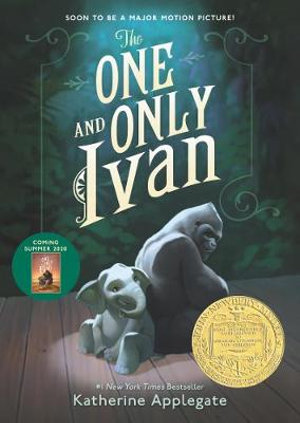
The One and Only Ivan

The One and Only Ivan - Katherine Applegate

Ivan is an easygoing gorilla. Living at the Exit 8 Big Top Mall and Video Arcade, he has grown accustomed to humans watching him through the glass walls of his domain. He rarely misses his life in the jungle. In fact, he hardly ever thinks about it at all.
Instead, Ivan thinks about TV shows he's seen and about his friends Stella, an elderly elephant, and Bob, a stray dog. But mostly Ivan thinks about art and how to capture the taste of a mango or the sound of leaves with color and a well-placed line.
Then he meets Ruby, a baby elephant taken from her family, and she makes Ivan see their home—and his own art—through new eyes. When Ruby arrives, change comes with her, and it's up to Ivan to make it a change for the better.
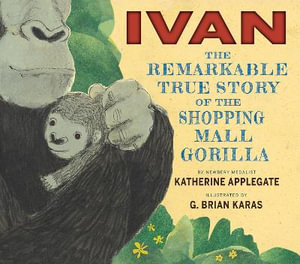
This gentle story with its readily lovable characters will promote thinking about the relationships between people and animals.  With brief chapters, sprinkling of humour and sweet illustrations, it would be an excellent read-aloud for middle grade and upper-grade students. Written from Ivan's perspective, it is a story of courage and kindness which will have children cheering for Ivan and his friends, as well as humanity. This story is beautifully written and would inspire children to make text-to-world connections about animal rights issues, particularly the treatment of animals in captivity. The One and Only Ivan is fiction, however the author provides notes at the end of the book about the real Ivan who inspired this story. An illustrated picture book version of this text has also been released.

Ivan : The Remarkable True Story of the Shopping Mall Gorilla - Katherine Applegate


Yoo-Hoo, Ladybug!

Yoo-Hoo, Ladybug!

A beautiful, fun book from one of my favourite children's authors! With bright, cheerful illustrations and rhyming text, this playful book is sure to engage young readers as they try to find the sneaky ladybug hiding on each page. Just like other Mem Fox books, such as Where is the Green Sheep and Tough Boris, I really appreciated the way that this book quickly builds a childs confidence in their ability to read on account of the repetitive text and excellent picture prompts. Plus, it's lots of fun to spot the ladybug! Interestingly, if you don't call these little critters ladybugs, there is a different versions of this text titled Yoo-Hoo, Ladybird!